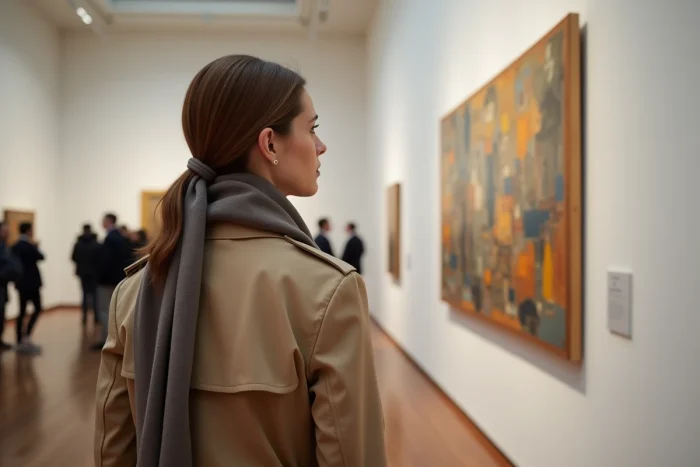
Paris offers such a dense cultural program each season that it becomes difficult to spot the exhibitions that truly deserve a visit. Between the retrospectives of great names, immersive installations, and ephemeral events, this year’s lineup stands out for its variety and a few rare appointments in France.
Exhibition in Paris: distinguishing a true cultural experience from a simple ranking
Have you ever noticed that some exhibitions generate considerable queues without offering a memorable experience? The number of visitors or the fame of an artist does not guarantee the quality of the experience on site.
When choosing an exhibition with only an evening or a weekend to spare, three criteria make a difference. The first is the scenography: an exhibition that transforms the space to immerse the visitor leaves a stronger impression than a lineup of paintings on white walls.
The second is the rarity of the subject matter, such as a first retrospective in France or exceptional loans from foreign collections. The third is practical accessibility: evening openings, less crowded time slots, reduced rates for young audiences.
Several Parisian venues now publish their least busy time slots. This type of information, often shared on mag-paris.org, allows for smoother visit planning, away from the Saturday afternoon peaks.
- Check if the exhibition offers evening openings or extended hours during the week, which radically changes the comfort of the visit.
- Favor venues that showcase works rarely seen in France rather than displays of pieces already viewed in permanent collections.
- Look at the average visit duration indicated by the museum: an exhibition that can be seen in less than an hour is suitable for a free evening.
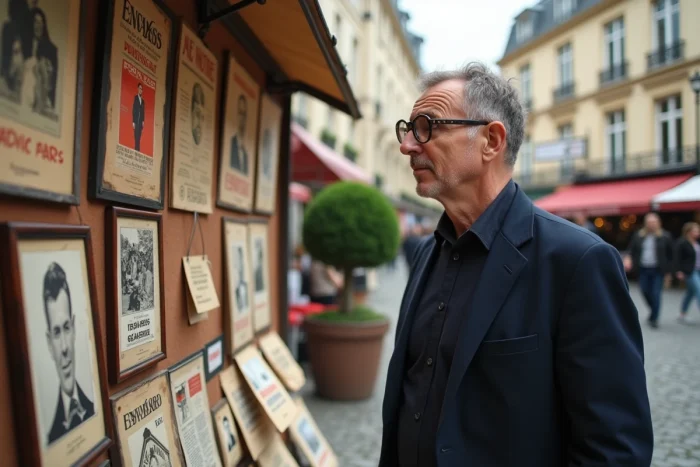
Matisse, Michelangelo, and Calder: the standout retrospectives of the year in Paris
Among the exhibitions worth visiting this year, some bring together rare conditions. “Matisse. 1941-1954” at the Grand Palais focuses on the painter’s final period, that of cut-out gouaches and the chapel of Vence. This framing choice avoids an exhaustive retrospective and allows for a deep dive into a specific creative turning point.
At the Louvre, “Michelangelo / Rodin” compares two sculptors separated by several centuries. This type of confrontation forces the visitor to observe works they thought they already knew in a new light. It’s a journey that works even for those without a background in art history.
At the Louis Vuitton Foundation, “Calder. Dreaming in Balance” explores the artist’s mobiles and stabiles in spaces designed to allow the works to move. The scenography plays a central role here: the volumes of Frank Gehry’s building provide a setting that few museums can replicate.
Károly Ferenczy: a discovery not to be overlooked
At the Petit Palais, Károly Ferenczy embodies Hungarian modernity at the turn of the twentieth century. The exhibition allows visitors to discover a pictorial movement rarely shown in France.
Contemporary art and immersive installations: what changes the visit
This year, the Grand Palais hosts its first major exhibition in France dedicated to Leandro Erlich. The Argentine artist is known for his installations that play with perception: building facades laid on the ground, empty swimming pools, mirrors that defy gravity. This type of proposal transforms the visitor into an active participant.
The exhibition “Beyond the Streets,” dedicated to street art and its ramifications in contemporary art, offers another perspective. It brings together artists from the international urban scene in a journey that traces several decades of creation outside traditional circuits.
Fashion and decorative arts: exhibitions at the intersection of disciplines
The Maillol Museum is programming a retrospective dedicated to Gianni Versace for the summer. This type of exhibition attracts an audience that does not necessarily frequent classical art museums, and that is precisely what makes it a cultural event in its own right.
At the Jacquemart-André Museum, “Splendors of the Baroque” offers a journey through the great hours of this artistic movement. The intimate setting of the venue, a former private mansion, gives the paintings a proximity impossible to achieve in large museums.
Free exhibitions and reduced rates in Paris: an underestimated lever
This year’s program shows a rise in free or reduced-rate offerings, particularly during certain time slots or for those under twenty-six. This point deserves attention: many visitors are unaware that several Parisian museums offer free access on the first Sunday of the month or in the evenings.
Free temporary exhibitions also exist in private foundations or during special events. Checking the calendar for free evening openings before planning a cultural weekend in Paris allows for budget optimization without sacrificing the quality of visits.
The real criterion for choosing an exhibition in Paris this year is not the artist’s fame, but what the venue and the scenography do with their works. A Leandro Erlich installation in the nave of the Grand Palais or Calder’s mobiles within the architecture of the Vuitton Foundation create experiences that the reproduction of a catalog can never replace.