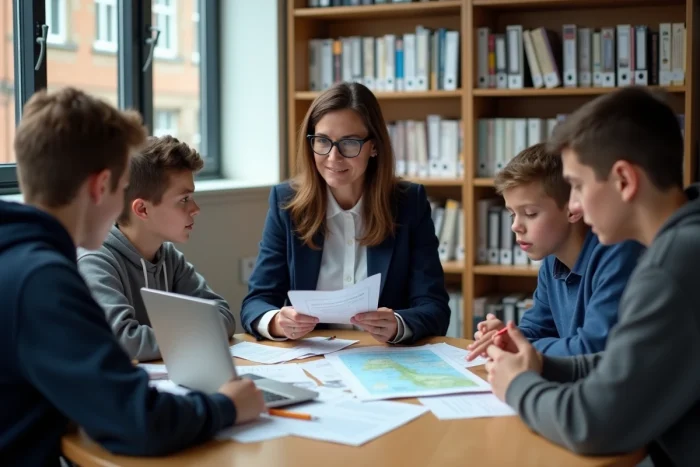
A training dedicated to organizing school trips provides a precise methodological framework: regulations applicable to overnight trips, supervision ratios according to the level, legal responsibilities of the organizing teacher, and insurance obligations. Without this foundation, preparation relies on informal exchanges between colleagues or on circulars skimmed through, with a risk of errors on regulatory points that affect student safety.
PPMS in mobility and crisis management: the most reliable sorting criterion
Most school trip training programs list logistical steps (budget, transport, accommodation). What truly differentiates them is the emphasis placed on crisis situations outside the establishment.
Since the generalization of specific safety plans (PPMS), several academies and MGEN offer modules where an incident in mobility is simulated: transport accident, weather alert, terrorist alert in a foreign city. The trainer details the distribution of roles among supervisors, standard messages to send to families, and coordination with the rectorate or consulate abroad.
A program that only reminds of administrative obligations without ever addressing this operational aspect does not prepare for the reality of a trip. When choosing, checking for the presence of a practical crisis management exercise remains the most discriminating filter between a useful training and a mere regulatory reminder. Teachers who have attended the training on partir-en-classe.org find this type of concrete situational training, structured around current obligations.
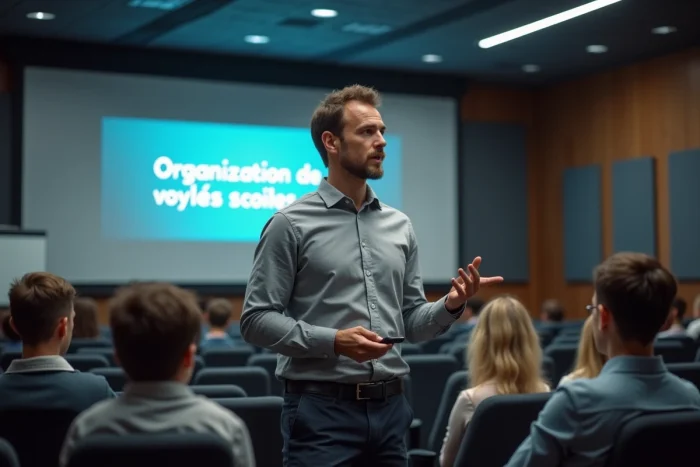
Protection of minors and right to image: two often absent aspects
Recent ministerial priorities emphasize the protection of minors against sexist and sexual violence (VSS). A serious training program incorporates this aspect: identifying warning signs, reporting procedures during a trip, and conduct to follow when an external supervisor participates in the trip.
The other blind spot concerns the right to image and data protection of students in mobility. The recommendations from CNIL regarding the use of smartphones by minors have prompted organizations like Canopé networks or academic DANEs to offer sessions on managing photos and videos published during a school trip.
What the training should cover regarding digital aspects
- The rules for disseminating photos of students on the establishment’s social networks or on a travel blog, in compliance with GDPR
- Drafting a mobile phone usage charter tailored to the trip, distinct from the usual internal regulations
- The procedure to follow if a student publishes content involving other minors without parental consent
If the training program does not mention either the protection of minors or the digital framework, it is likely outdated compared to the latest academic recommendations.
Framework for comparing school trip training formats
The format of a training session determines what one gains from it. A two-day in-person workshop allows for situational exercises that three hours of videoconferencing cannot replace. Conversely, an asynchronous online module offers the necessary flexibility when the school calendar allows little leeway.
Concrete criteria for selection
Before comparing catalogs, asking these questions to the provider or academic organization can save time:
- Does the program include a practical module on PPMS in mobility, with simulation or case study?
- Does the regulatory aspect cover trips abroad (consular coordination, repatriation insurance, customs specifics for students without a European passport)?
- Does the training address the protection of minors against VSS in accordance with recent ministerial guidelines?
- Does the trainer have direct experience in organizing school trips, or is it a generalist project management speaker?
A program that checks these four points covers areas of real risk. Trainings that focus solely on destination choice or funding search address the visible part of the project without touching on the legal responsibilities of the organizer.

Funding for training: identifying the right channel according to status
The cost of training should not be a barrier, but the funding channels vary depending on the teacher’s profile. In primary education, academic training plans (PAF) regularly offer targeted workshops on organizing overnight trips. Registration goes through the academic portal, usually between May and September for the following year.
In secondary education, the approach is similar via the PAF, but the offerings vary significantly from one academy to another. Some offer specific training for trips abroad, while others group the topic under a broader title of educational project management.
Outside National Education
Teachers in private institutions under contract or association supervisors do not always have access to the PAF. In this case, the personal training account (CPF) can fund certain certified training programs, provided that the organization is listed on the Mon Compte Formation platform. Checking this point before committing avoids discovering too late that the chosen workshop is not eligible.
The funding criterion should not take precedence over content. A free training via the PAF that does not address crisis management or the protection of minors will be less useful than a paid workshop that covers both dimensions. The content of the program remains the primary selection criterion, with the funding method coming afterward.