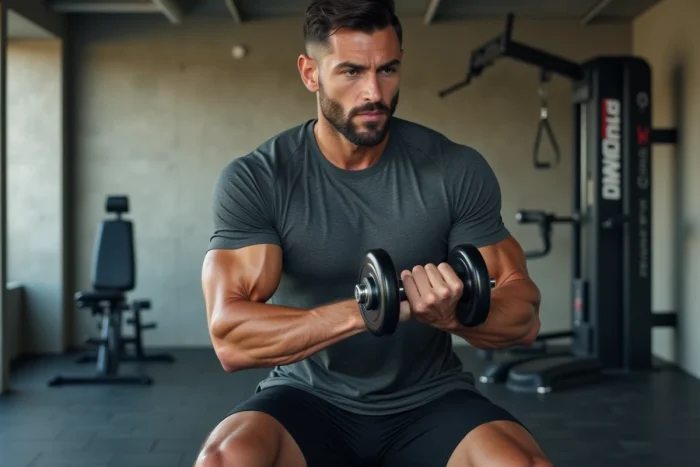
A garage of 8 m², a tight budget, and the goal of working both the upper and lower body without multiplying machines: this is the starting situation for most people setting up a home gym. The choice of a home workout machine is not based on a product sheet, but on the compatibility between the equipment, the available space, and the type of training intended.
Revised EN 957-1 Standard: What Changes for Stations Sold in France
The revision of the EN 957-1 standard in 2025 imposes enhanced stability tests for multifunction stations intended for home use. In practical terms, some entry-level models have been removed from the French market because they no longer meet the new thresholds for resistance to dynamic loads.
For us, the buyers, this means one thing: check for CE compliance and the EN 957 mention on the label before confirming an order. Marketplaces like Amazon still list devices shipped from abroad that escape this control. If the seller does not explicitly mention the standard, we move on.
To compare compliant models and current prices, one can check the best strength training device on Légendes du Sport which details the tested references.
Multifunction Station or Functional Trainer: Two Training Logics
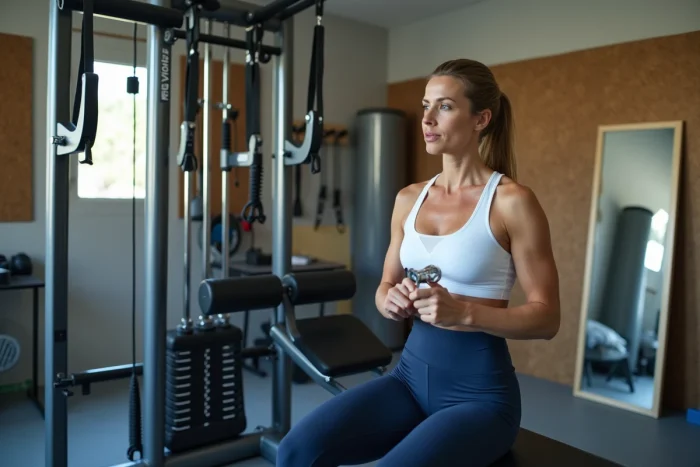
These two categories are often confused. A multifunction station includes a bench, a leg press, a pull station, and sometimes a squat rack in a single frame. The functional trainer, on the other hand, consists of two adjustable pulley columns, without a fixed bench.
The functional trainer surpasses the station in joint versatility. You can adjust the height of the pulleys, work in rotation, unilaterally, with angles that are impossible to replicate on a guided machine. Independent benchmarks confirm that this type of device exceeds hybrid exercise bikes in terms of overall strengthening, even if it remains limited in pure cardio.
The multifunction station is better suited when you want to follow a classic strength training program (bench press, vertical pull, leg press) without having to master free movement. It guides the movement, which reduces the risk of injury for beginners.
The Floor Space Criterion
A functional trainer occupies about the space of a double door. A complete station with a bench and leg press requires more depth and lateral clearance. Before buying, measure the room and add at least one meter of clearance behind and on the sides to work without constraints.
Cables and Pulleys on Budget Devices: Documented Weak Point
Field feedback is consistent on this subject: stations sold for under a thousand euros show premature wear of cables and pulleys after six to twelve months of daily intensive use. Plastic rollers crack, cables fray, and replacing parts sometimes costs as much as a mid-range device.
Opting for a mid-range model with metal bearing pulleys avoids this problem. Check the technical sheet for the mention “ball bearings” or “steel bearings.” Steel braided cables resist significantly better than low-end nylon cables.
- Nylon or composite plastic pulleys: to be avoided for daily use, rapid wear reported by many users
- Metal bearing pulleys: durable movement fluidity, standard on mid-range and high-end lines
- Steel braided cables: superior resistance to nylon cables, less frequent replacement
Feedback varies on the exact longevity depending on the brands, but the general trend encourages investing a bit more upfront to avoid recurring maintenance.
Squat Rack and Adjustable Dumbbells: The Modular Alternative for Small Spaces
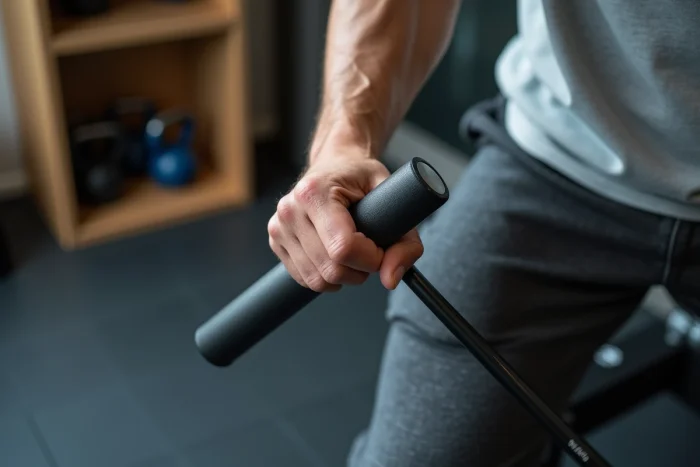
When space does not allow for a complete station, a squat rack combined with adjustable dumbbells covers most strength training exercises. Squats, bench press (with a folding bench slipped inside the rack), rowing, deadlifts: you can work the entire body with a reduced footprint.
Adjustable dumbbells replace about ten pairs of weights and take up the space of a single set. The dial or pin system allows you to adjust the load in seconds between sets.
Combining Olympic Bar and Bumper Discs
For those aiming for heavy loads on compound movements (squats, deadlifts), a 20 kg Olympic bar with rubber bumper discs remains the most cost-effective duo. The bumpers absorb impacts on the ground, protecting the flooring and reducing noise for neighbors. Complete with a shock-absorbing floor made of interlocking rubber tiles.
Connected Strength Training Devices with AI: Gadget or Real Progress Lever
Since early 2025, devices incorporating artificial intelligence to generate adaptive programs are gaining traction among home users. The principle: sensors measure execution speed and load, then the algorithm adjusts the program in real-time.
The main interest is the self-regulation of intensity without a coach. For someone training alone who does not know when to increase the load or reduce the volume, this is a real benefit. The price remains significantly higher than that of a classic device, and a stable Wi-Fi connection is often an underestimated prerequisite in a garage or basement.
- Adaptive programs: automatic adjustment of load and number of repetitions based on measured performance
- Integrated progress tracking: session history, strength curves, stagnation alerts
- Technical constraint: requires a reliable internet connection and a dedicated app, sometimes with a monthly subscription
Buying a home strength training device comes down to three considerations: the actual space available, the type of movements practiced, and the quality of mechanical components. It’s better to have a sturdy rack and reliable dumbbells than a low-cost multifunction station whose cables fail after a few months. Compliance with the revised EN 957-1 standard remains the first filter to apply before any price comparison.