
Stopping your studies to shift to another path does not mean sweeping everything away with a wave of the hand. More and more art schools are focusing on flexibility: credit validation, recognition of past experiences, and a presentation before a pedagogical committee can be enough to give a new impetus to one’s curriculum. And while each situation is unique, there are real levers today to capitalize on one’s experience.
In some institutions, things are not only based on the academic record. Specific tests, sometimes an interview, are added to the administrative process. From one place to another, the modalities for bridging and validating prior learning vary greatly, making the system both open… and sometimes difficult to grasp. Staying informed about dates, procedures, and criteria helps avoid unpleasant surprises.
Changing Course: Why Art Schools Are Attracting More and More Students Seeking Meaning
In Paris, Bordeaux, Lyon, and elsewhere, art education now appeals to a much broader audience than one might think. Gone are the days when art schools were reserved for an elite of enthusiasts: now, many students eager to give meaning to their journey are turning to them, tired of overly defined paths. Thanks to the ECTS credit system and equivalences, it is possible to change direction without starting from scratch. A BTS, a degree, or even a year of university can open the doors to a reorientation towards a higher art school, provided a solid application is presented.
This choice is not solely motivated by the desire to learn a trade. Art schools offer the chance to step off the beaten path, to dare to create, experiment, and work in workshops. Classes are lively, critical thinking is encouraged, and diverse artistic practices intersect. Here, students equip themselves to grasp the complexity of the world, invent forms, and tell stories differently. The range of specialties, including graphic design, visual communication, and applied arts, allows everyone to shape a trajectory that reflects their individuality, far from rigid frameworks.
For many, discovering ESMA marks a turning point. This moment signifies the affirmation of a demand and a freedom: to open up to new universes, to read society through creation, to master techniques, references, and precise gestures. Higher art schools then transform into true laboratories, where personal projects are developed collaboratively, weaving meaning into practice. A space for emancipation, where everyone finds a way to build their own story.
What Pathways Exist to Reorient Towards an Art School, Regardless of Initial Background?
The artistic pathway is no longer an obstacle course. Today, every step of the curriculum—university, technical, professional—opens the way to higher art schools. A student from a BTS, BUT, a degree, a bachelor, or even a master can apply without being condemned to start over. The interplay of equivalences and ECTS credits facilitates the recognition of one’s journey, provided links between the training programs are demonstrated.
Here are some concrete perspectives for those wishing to change direction:
- After a first year of university, it is possible to enter a BTS or BUT.
- A student who has validated their first year of PASS (Specific Health Access Pathway) can shift to a LAS (Health Access Degree) or join the second year of a degree, even without admission to MMOPK.
- Parallel admissions open the door to a second year of bachelor in a private school, or to a degree after a BTS or BUT.
- After a preparatory class, direct entry into L2 at university is possible with 60 ECTS credits in hand.
Holders of a bac+2 can aim for a L3, a bachelor, or join a higher school depending on their application. With a bac+3, access to a master is considered, sometimes with a reorientation towards design, creation, or visual communication. University equivalence, via ECTS credits, makes these transitions significantly smoother than before. In Paris, Lyon, and Bordeaux, higher art schools scrutinize profiles, value experiences, and identify potentials. Today, reorientation is no longer limited to a few exceptional paths: it allows everyone to draw a path faithful to their desires and artistic sensitivity.
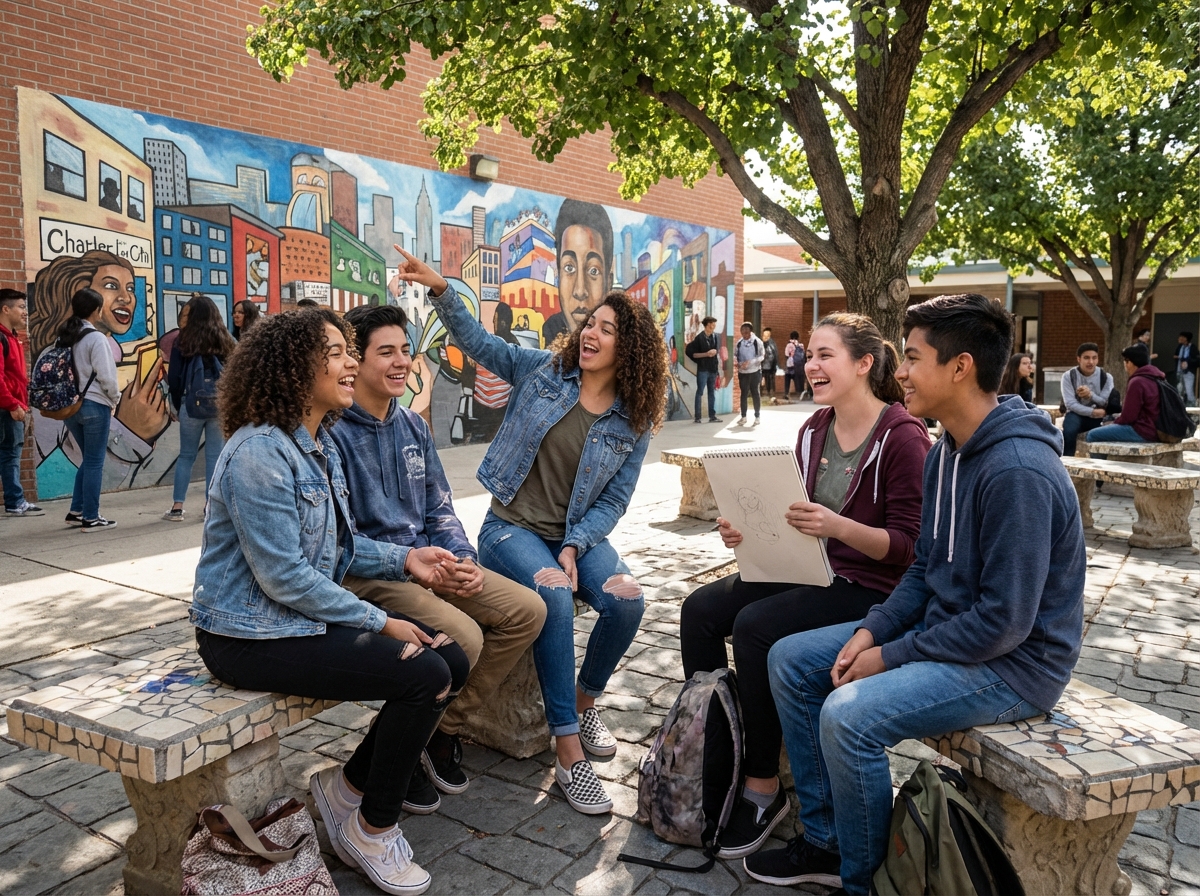
Succeeding in Artistic Reorientation Without Starting from Scratch: Tips, Advice, and Testimonials to Enhance Your Journey
Parallel admissions are an opportunity to join an art school or higher institution without sidelining what has already been accomplished. The first step is the application file. This is where you need to give your all: present your experiences, concrete achievements, internships, and personal projects. Your background, even if distant from art, can become an asset. Transversality is sought after: having studied science, law, or communication often contributes to building an original artistic project.
To maximize your chances, keep these tips in mind:
- Ensure a clear coherence between your original background and your creative ambitions.
- Highlight your skills acquired elsewhere: methodology, organization, project management, teamwork.
- Prepare thoroughly for the motivation interview: show that your approach is authentic and that you are ready to invest in an artistic training.
Testimonials
Camille, a graduate of a BTS in communication, joined a higher school of applied arts in Paris. She recalls: “My experience in event planning and writing was seen as an asset in the interview. Schools are looking for profiles capable of merging creativity and method.” Paul, on the other hand, came from a biology background in Bordeaux before joining a national higher school of arts: “My research approach and my taste for experimentation made a difference in my application.”
Stay true. The juries primarily seek a sincere artistic project that fits into a personal story and is enriched by experiences lived elsewhere. Even an experience far from the artistic field, well articulated and embraced, can become a real driving force. Here, every detour counts and can open the door to new horizons. Art schools, far from being inaccessible sanctuaries, assert themselves as bridges to unprecedented paths, at the intersection of passion and reflection. The next trajectory could be yours.