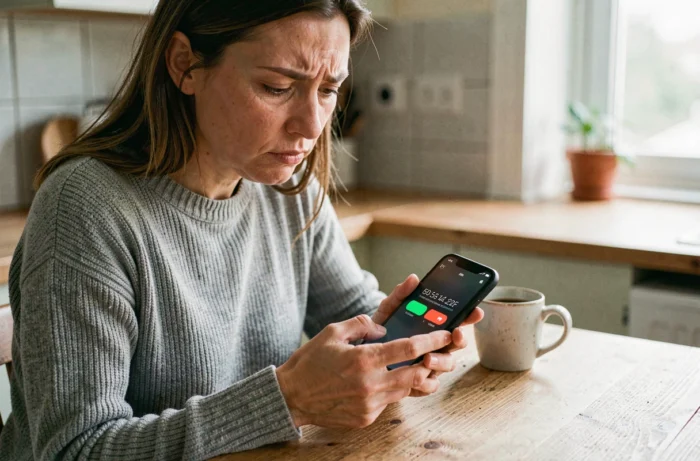
A geographic number is displayed, a local code that you recognize, and yet the call comes from an automated system hosted abroad. Detecting an unwanted phone call before answering today requires cross-referencing multiple technical signals, because the displayed number alone is no longer a reliable indicator.
Spoofing and STIR/SHAKEN Authentication: What the Displayed Number Really Means
Spoofing modifies the number presented to the recipient without compromising the SIM card or the device of the actual caller. Therefore, a number starting with 01, 02, or 03 does not prove that the call is coming from a French landline. Fraudulent networks exploit this weakness to display local numbers and bypass the natural distrust of a foreign code.
Number authentication, via the STIR/SHAKEN protocol, adds a layer of verification upstream. The operator’s network certifies that the calling number corresponds to the line making the call. When this certification is absent or fails, the call can be flagged as unverified even before the phone rings.
We observe that operators do not implement this protocol at the same level. The absence of a “verified call” mention on an incoming call does not automatically mean a scam, but its presence is a positive indicator. It is by combining this signal with other criteria that detection becomes more accurate, as detailed in Fireblog net’s advice on identifying spam calls.
Arcep Prefixes Reserved for Telemarketing: The List to Watch
Arcep has assigned specific number ranges to automated calling platforms. These prefixes are the most exploitable pre-answering signal for an individual equipped with a simple display screen.
The identified prefixes are:
- 01 62, 01 63 (Île-de-France area)
- 02 70, 02 71 (North-West area)
- 03 77, 03 78 (North-East area)
- 04 24, 04 25 (South-East area)
- 05 68, 05 69 (South-West area)
- 09 48, 09 49 (non-geographic numbers)
An incoming call whose first four digits match one of these ranges is very likely coming from an automated prospecting system. This is not absolute proof of fraud, but the signal is enough to decide not to answer and check the number afterward.
The difficulty lies in the fact that spoofed numbers can use any prefix, including those outside this list. A call starting with 01 44 can very well be spoofed. The Arcep prefix filters declared telemarketing, not the fraud that disguises itself.
Commercial Telemarketing or Fraud Attempt: Distinguishing Before Answering
An unsolicited commercial call and a fraudulent call do not present the same risks, and the appropriate response differs. Since August 2026, a professional is generally prohibited from telemarketing without prior consent from the recipient. This consent must be free, specific, informed, and revocable. A commercial call that does not meet this condition is illegal, but it remains within a regulated framework.
Fraud, on the other hand, aims to extract personal data or payment. Networks now use conversational bots capable of mimicking human inflections, combined with the spoofing of local numbers. A call that seems personalized or displays a familiar geographic number should not be considered reliable without independent verification.
We recommend cross-referencing three criteria before deciding:
- Is the prefix on the Arcep list of ranges reserved for automates?
- Does the operator display a “verified call” mention or a spam warning?
- Does the number correspond to a known contact or an expected call (medical appointment, delivery)?
If none of these three criteria favor the call, letting it ring and then checking the number via a reverse directory remains the best protection.
Native Android and iOS Filtering: Settings to Activate Without Third-Party Apps
Both mobile operating systems include filtering functions that work before answering, directly at the phone app level.
On Android, the “filter unwanted calls” option in the Phone app settings (provided by Google) identifies numbers reported by the community and can send them directly to voicemail. On Pixel devices, manual filtering is available in France and allows users to ask the assistant to question the caller about the reason for their call before the phone rings.
On iPhone, the “Filter Unknown Senders” setting redirects any call from a number not in contacts, recent history, or Siri suggestions to voicemail. This setting is drastic: it also blocks legitimate unregistered calls. It suits users who receive few calls from unknown numbers, but it creates false positives for those expecting calls from healthcare professionals or public services.
Some operators also offer anti-spam filters integrated into their network, free or paid depending on the plans. These filters act upstream of the device and can block the call even before it reaches the phone.
The combination of operator filtering and native filtering from the operating system remains the most effective configuration today for individuals who do not wish to install third-party apps. No single solution covers all scenarios: spoofing bypasses known number databases, and conversational bots can pass standard behavioral filters.
Systematically verifying an unknown number after the call, rather than answering by default, remains the safest reflex in a landscape where the boundary between legal telemarketing and fraud blurs with every ring.