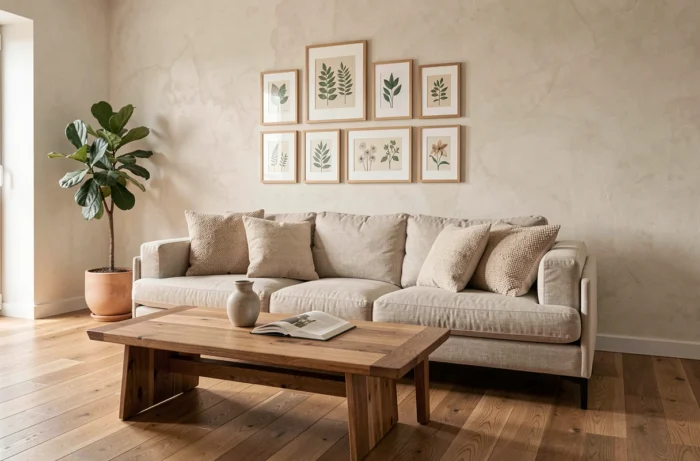
Repainting a wall on a Sunday afternoon, moving the sofa 80 cm to the left, replacing the living room cushions: we often think that interior decoration boils down to these quick gestures. The result can be disappointing if we haven’t laid some groundwork beforehand. Here are ten concrete tips, tested in the field, to transform your home without false starts.
1. Test the color on a section of the wall before painting the entire room
We’ve all experienced the paint can bought on a whim, looking stunning in the store but disappointing once applied at home. The natural light in your room radically changes the perception of a shade. A rosy beige can turn gray under northern lighting.
Apply a sample of at least 50 x 50 cm on the most exposed wall and another on the opposite wall. Observe the result at three times of the day: morning, noon, late afternoon. Two days of observation can prevent a costly redo. If you’re looking for additional references, detailed guides can be found on the Tip Top Déco et Maison website that cover the basics of successful interior decoration.
2. Check the VOC labeling of decorative products
Paints, glues, varnishes, and particle boards emit volatile organic compounds. In France, construction and decoration products have been subject to regulatory labeling since September 1, 2013, ranging from A+ (very low emissions) to C.
Consistently favoring A+ rated products reduces exposure to indoor pollutants. We rarely think to air out new furniture before installing it, but this reflex changes the air quality in the room, especially in a bedroom or poorly ventilated space.
3. Limit the palette to three materials per room
Wood, linen, metal, stone, rattan, velvet: natural materials are making a strong comeback in interiors in 2026. The trap is mixing everything. A living room that combines raw wood, linen, and brushed metal maintains visual coherence. Add rattan, marble, and velvet at the same time, and the whole becomes cluttered.
Choose a dominant material (the one that occupies the most surface), a secondary material (accent furniture, lighting), and an accent material (cushions, small objects). Three materials are enough to create depth without saturating the space.
4. Arrange the furniture before choosing accessories
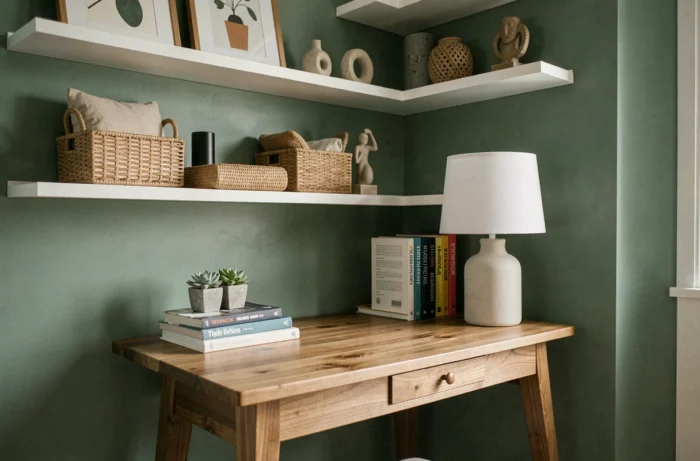
We often start with cushions, candles, and frames. In practice, the opposite works better. First, place the main volumes (sofa, table, sideboard) and move around the room. Ensure that the passage between two pieces of furniture exceeds shoulder width.
Accessories then fill visually empty areas. This sequence prevents the accumulation of decorative objects that end up cluttering a poorly arranged space.
5. Incorporate reuse for materials and furniture
The decree of June 10, 2022, regarding the REP PMCB sector sets progressive reuse targets for construction materials: 2% in 2024, 4% in 2027, and 5% in 2028. Beyond regulations, thrift stores and second-hand platforms offer unique pieces that are hard to find in stores.
An old door transformed into a headboard, reclaimed cement tiles for a bathroom floor, a vintage workbench found at a flea market: reuse adds character without producing additional waste. Opinions vary on this point, but light sanding and wax are often enough to restore an old piece of furniture.
6. Multiply light sources instead of relying solely on a ceiling fixture
A single central light point flattens volumes and creates harsh shadows. Distribute three types of lighting in each room:
- A general diffuse lighting (off-center ceiling light or pendant)
- A directed functional lighting (desk lamp, reading light, under-cabinet spotlight)
- An ambient lighting (string lights, table lamp, LED candle)
This layering allows you to adapt the atmosphere of the living room to the moment’s use without touching the furniture.
7. Use a mirror to correct a dark or narrow room
Placed opposite a window, a mirror reflects natural light towards the back of the room. In a narrow hallway, a large mirror placed on the floor against the wall creates immediate visual depth.
Size matters: a round mirror softens a very angular room, while a vertical rectangular mirror elongates a low ceiling. The mirror acts like a second window without any renovation.
8. Choose a rug suitable for the size of the living room
A rug that is too small floats in the middle of the room and visually shrinks the space. The operational rule: the front legs of the sofa and chairs should rest on the rug. This anchors the living area and structures the living zone.
In terms of material, a wool or jute rug lasts better over time than a thin synthetic model. For a high-traffic area, avoid long pile rugs that flatten in a few months.
9. Air out the layout instead of pushing all furniture against the walls
The most common reflex in a living room is to push every piece of furniture against the wall. This creates space in the center, but the room loses all intimacy. Moving the sofa forward by 30 cm creates a circulation space behind it, usable for a small side table or console.
Pulling furniture away from the walls gives the impression of a larger space, not a smaller one. It’s counterintuitive, but it consistently works in medium-sized rooms.
10. Introduce plants according to the actual brightness of each room
Green plants appear in most trendy interiors, but their survival depends on a simple parameter: the amount of available light. Placing a ficus in a windowless hallway is a death sentence within weeks.
- Very bright room (south/west): monstera, fiddle leaf fig, strelitzia
- Medium brightness (east): pothos, philodendron, calathea
- Low brightness (north, hallway): sansevieria, zamioculcas
Adapt the container to the existing decor. A terracotta pot fits better in an interior with natural materials than a white plastic pot, regardless of the room’s design.
Interior decoration relies less on a substantial budget than on a logical sequence: placing the volumes, choosing the materials, adjusting the light, and only then adding the details. Each tip here works independently of the others, but it’s their combination that transforms an interior into a coherent and pleasant living space.