In France, life expectancy at retirement exceeds two decades for most new retirees. This duration, far from being a simple extension of active life, raises concrete questions about health, social connections, time occupation, and financial resources. Living well in retirement is not just about ticking off a list of leisure activities: it is a set of structuring choices that deserve to be examined with clarity.
Employment-retirement combination: an underestimated financial and psychological lever
Since September 1, 2023, the pension reform has profoundly changed the rules for combining work and retirement. A retiree who resumes professional activity and meets certain conditions can now acquire new retirement rights, which increases their future pension. This development, driven by law n°2023-270 of April 14, 2023, changes the game for those considering a return to work.
The combination does not only concern traditional salaried positions. Part-time work, occasional missions, micro-enterprises: the formats are varied. For some seniors, resuming a chosen activity, even just a few hours a week, contributes as much to psychological well-being as to purchasing power. The feeling of social usefulness and the structuring of time are among the most frequently cited benefits.
Specialized platforms list offers and resources aimed at seniors seeking activities suited to this phase of life, as can be seen on https://www.seniorova.fr/, which aggregates concrete solutions for this age group. Since the legal framework is recent, feedback on the ground still varies regarding the actual ease of access to these new rights depending on the pension funds.
Senior nomadism and retirement abroad: beyond the cliché
Since the Covid crisis, the phenomenon of senior nomadism has gained momentum. The Observatory of Retired Expatriation, published by Malakoff Humanis in October 2023 (3rd edition), reports a continuous increase in projects for partial or total retirement abroad. The main motivations: the climate, moderate cost of living, and access to quality healthcare.
Portugal, Spain, and Morocco are among the most cited destinations. Long stays, wintering, or even intergenerational co-living outside France attract a growing number of French retirees. These are no longer just permanent expatriations: many adopt a pendular lifestyle, splitting the year between two countries.
The limitations of this lifestyle deserve to be addressed. Health coverage abroad remains a major point of concern. Bilateral social security agreements do not cover all countries or all situations. The geographical distance from loved ones, often minimized at first, can weigh on family relationships in the medium term.
Physical and cognitive health after 60: what research indicates
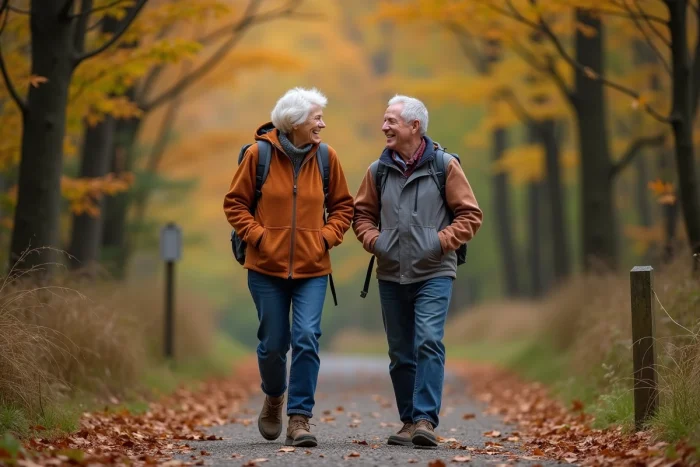
Health is the foundation of any positively experienced retirement. Regular physical activity remains the most documented recommendation for reducing the risk of cognitive decline, cardiovascular diseases, and loss of autonomy. Walking, swimming, gentle gymnastics: intensity matters less than regularity.
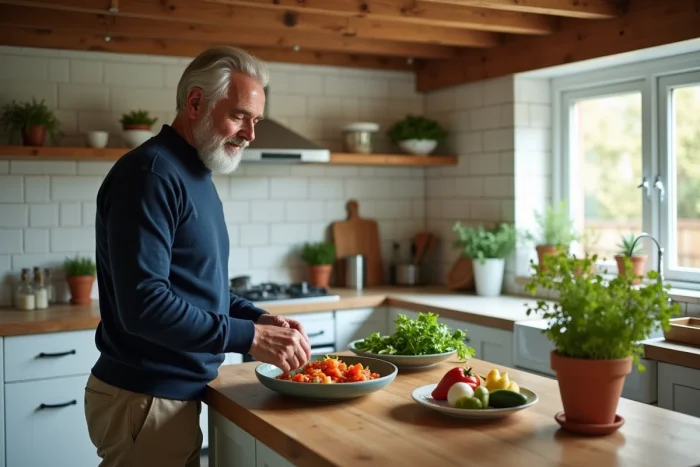
Diet plays a complementary role. The Mediterranean diet, rich in fruits, vegetables, fish, and olive oil, is regularly associated with better cardiovascular and cognitive health among seniors. The available data do not allow for concluding that a single diet suits everyone, but dietary diversity and the reduction of ultra-processed foods are widely agreed upon among health professionals.
- Regular medical check-ups (annual assessments, recommended screenings) allow for early detection of age-related pathologies.
- Cognitive stimulation (reading, logic games, learning a language) slows the decline of executive functions.
- Sleep, often disrupted after 60, deserves particular attention: persistent issues warrant specialized consultation.
Social isolation of seniors: a documented risk but not a fatality
Social isolation is one of the main risk factors for the mental and physical health of retirees. The end of professional life removes a network of daily relationships that nothing automatically replaces. Maintaining and renewing social ties requires a conscious effort from the first months of retirement.
Several concrete avenues exist:
- Volunteering in local associations offers a structured framework to meet others and feel useful.
- Senior residences with common areas encourage daily exchanges without imposing permanent communal living.
- Leisure universities and municipal workshops offer educational and creative activities accessible to all levels.
- Intergenerational co-living, still marginal in France, is beginning to take shape in certain urban areas.
Feedback on the effectiveness of digital tools (videoconferencing, social networks) to combat isolation varies. For some seniors, these tools usefully complement in-person relationships. For others, they do not replace physical contact and may even reinforce feelings of loneliness.
Transition coaching and personalized support in retirement
Structured life transition coaching programs dedicated to retirement are developing in large companies and among specialized firms. The goal: to anticipate the identity upheavals related to the end of a career and to build a coherent life project before the actual departure.
These supports address topics rarely covered in traditional guides: the loss of professional status, the redefinition of the couple in daily life, the management of unstructured time. The format varies, ranging from individual sessions to group workshops.
The question of cost remains a barrier. When the company does not finance this type of service, the out-of-pocket expenses can be discouraging. The available data do not yet allow for measuring the long-term impact of these programs on retirees’ quality of life, but demand is increasing every year, indicating that the need exists.
Living well in retirement relies on concrete choices, not universal recipes. The legal framework is evolving, lifestyles are diversifying, and each journey remains unique. The only constant: the first decisions made in the months following retirement have a lasting impact on what follows.